
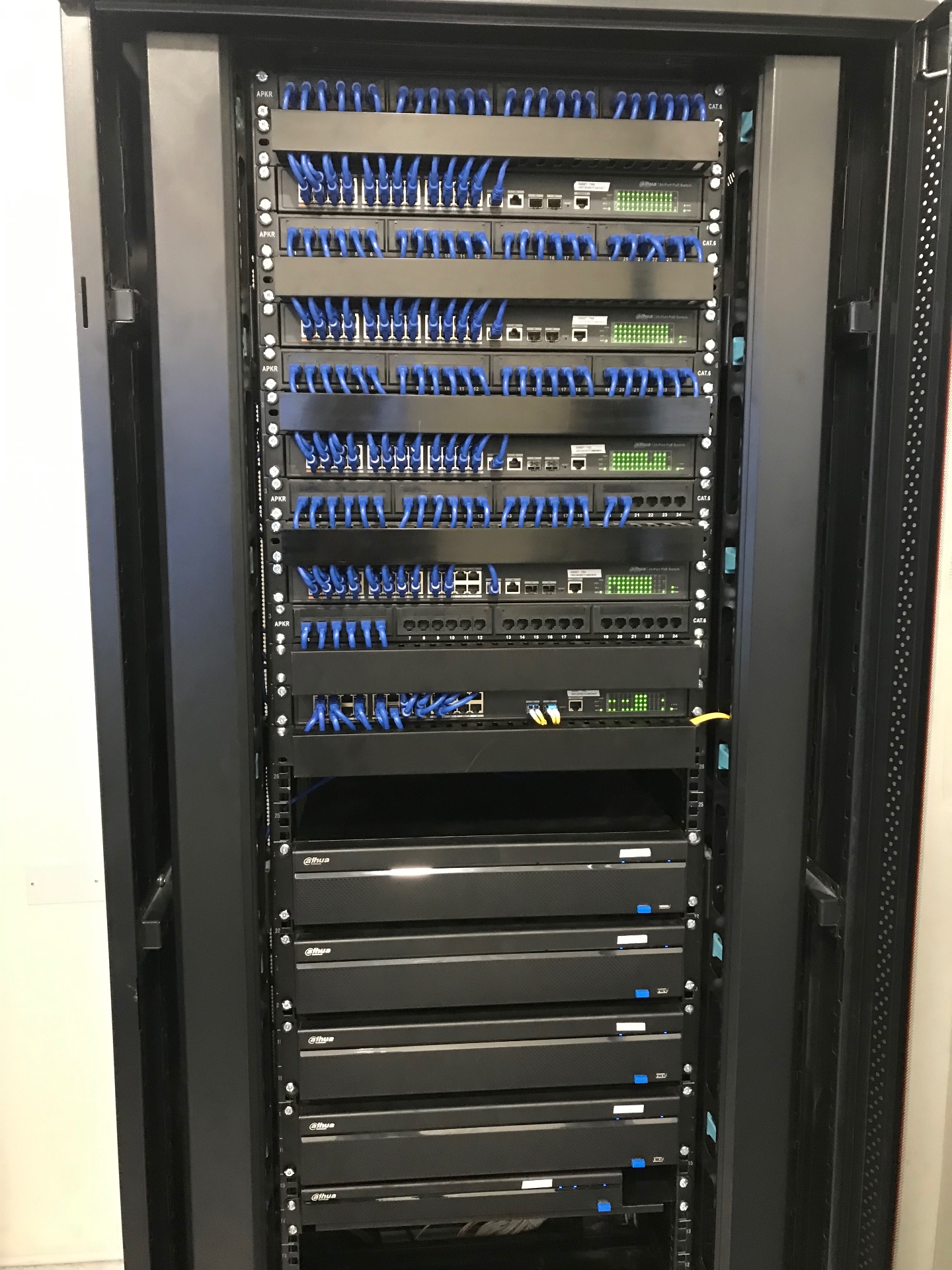
ICT & ELV Annual Maintenance Contract Guide
Most annual maintenance contracts are compared on price because they are written too vaguely to compare on anything else. This guide from MTT — My Telecom Technology — sets out what a serious ICT and ELV AMC should contain, and how to evaluate one properly.
MTT Engineering Guide
Published by MTT — My Telecom Technology, a systems integrator working across Bahrain and Saudi Arabia since 2007. More about MTT.
This guide is vendor-neutral and applies whether the incumbent contractor is MTT or someone else. It does not publish price ranges, because an AMC price is only meaningful alongside its scope.
Why an AMC exists
ICT and ELV systems do not fail on a schedule, but they do degrade on one. Camera housings collect dust, focus drifts, disks approach end of life, batteries lose capacity, firmware falls behind, patching gets undocumented, and configuration changes accumulate without a record. None of that is visible from the office — right up to the moment someone needs the system and it is not there.
An annual maintenance contract exists to make that decay visible and manageable, and to give you a defined route to a fix when something does break. It is an operational instrument, not an insurance policy.
Preventive versus corrective
| Preventive | Corrective | |
|---|---|---|
| Trigger | A schedule agreed in the contract | A reported fault or an alarm |
| Purpose | Find and correct degradation before it causes failure | Restore service after a failure |
| Typical activities | Inspection, cleaning, testing, battery and disk checks, firmware and configuration review, documentation update | Diagnosis, repair or replacement, retest, root-cause note |
| Measured by | Visits completed and findings closed out | Response and restoration against agreed categories |
| Priced as | A fixed annual programme | Included attendance, with parts either included, held or chargeable |
A contract with corrective cover only is not maintenance; it is a call-out arrangement. A contract with preventive visits but no defined response commitment leaves you exposed on the day something fails. Both halves need to be present and both need to be specific.
Scope boundaries and covered systems
List the systems covered, and — just as importantly — where each one stops. Most disputes come from the boundary, not the middle.
- which systems are in scope: CCTV, access control, intrusion, barriers, cabling, switching, wireless, UPS, telephony, PA/GA, AV;
- whether cover ends at the equipment or extends to the cabling and containment serving it;
- who owns the network the system depends on, and what happens when the fault is there;
- which sites are included, and how a new site is added mid-term;
- whether software platforms, licences and vendor support renewals are inside or outside the contract;
- what happens to equipment that is out of vendor support.
Asset register and criticality
A credible AMC starts from an asset register, and the first task of a new contract is usually to build or verify one. It should record each item's location, model, serial or identifier, firmware or software version, installation date, warranty position and criticality rating.
Criticality is what makes the rest of the contract proportionate. A camera covering a cash office, a barrier on the only HGV lane and a switch feeding a production area do not deserve the same response as a display in a meeting room, and the contract should say so.
Inspection frequency
Frequency should be stated per system and justified by environment and criticality rather than applied uniformly. Typical drivers:
- dust, heat, humidity, salt air and washdown accelerate degradation;
- outdoor and industrial equipment needs attention more often than comms-room equipment;
- battery-backed systems require a defined test regime, not a visual check;
- systems with regulatory or insurer expectations may have a mandated frequency;
- high-criticality assets justify more frequent inspection than the site average.
Ask for the visit schedule as a calendar, with the task list for each visit type attached. "Periodic inspection" is not a schedule.
SLA and response categories
Response categories need plain definitions before they need numbers. A workable structure defines what qualifies as each category, what "response" means, and when the clock runs.
- Critical — a safety, security or operational impact; the site cannot work normally.
- High — a system is significantly degraded or a critical asset is failed, with a workaround in place.
- Medium — a partial fault with limited operational impact.
- Low — a cosmetic or single-device issue that can be batched into the next planned visit.
Then state the covered hours, whether response means remote diagnosis or attendance, the target for restoration where it differs from response, the escalation path by role, and how performance is reported at review. MTT's annual maintenance service is structured this way.
Spare parts strategy
Response time means very little if the part takes six weeks. Decide the spares position for critical assets explicitly:
- contractor-held spares for common failure items;
- client-funded critical spares held on site for long-lead equipment;
- on-demand supply where downtime is tolerable;
- swap-out units for assets that must be restored the same day;
- a stated approach for obsolete equipment and when replacement is recommended instead.
Also agree whether parts are included in the annual fee or charged as used, and how consumables such as batteries and filters are treated.
Remote monitoring and support
Remote access shortens diagnosis and often removes the need for a visit, but it has to be governed. Agree what is monitored — device availability, recording health, disk status, UPS state, controller communication — and how alerts are handled and by whom.
Then agree the access method, named accounts, whether sessions are logged, and what your IT team must approve. Remote support that depends on a shared password left over from installation is a liability, not a service.
Firmware, configuration and cybersecurity
Networked ELV devices need the same discipline as IT assets. A mature AMC includes a firmware review at each preventive visit, controlled application of updates inside an agreed change window, account and permission review, removal of leavers, and configuration backup with a tested restore path.
None of this should be implicit. Where the client's IT function owns part of it, the split of responsibility belongs in the contract.
Documentation and reporting
A maintenance contract should leave the estate better documented every year, not worse. Expect as a minimum:
- a report per preventive visit, listing tasks completed and findings;
- defects raised with a severity and a proposed action, tracked to closure;
- an updated asset register reflecting replacements and changes;
- corrective job records with cause and resolution;
- a periodic performance review against the agreed categories;
- recommendations for renewal, capacity or obsolescence, with lead times.
Exclusions and interfaces
Clear exclusions protect both parties. Typical items sitting outside an AMC are damage caused by misuse, third-party work or force majeure; civil and builder's work; power supplies and infrastructure provided by others; changes to the corporate network; system expansions and upgrades; and equipment past end of vendor support.
Interfaces matter as much as exclusions. Where a fault could sit with the network team, the landlord, the software vendor or the contractor, agree in advance who investigates first and how the cost of a misdirected call-out is treated.
How MTT structures an AMC
- Step 01Condition survey
We inspect the installed systems and report their actual condition before any contract is priced.
- Step 02Asset register
Equipment is listed with location, model, firmware, warranty position and criticality.
- Step 03Scope and SLA
Covered systems, boundaries, exclusions, visit schedule and response categories are agreed in writing.
- Step 04Spares position
Critical spares and swap-out arrangements are decided against lead times and tolerance for downtime.
- Step 05Planned programme
A visit calendar with per-visit task lists is issued and scheduled around your operations.
- Step 06Review
Performance, defects, obsolescence and recommendations are reviewed periodically and the programme adjusted.
AMC evaluation checklist
- Every covered system listed, with its boundary stated
- Asset register required, and who builds it agreed
- Preventive visit frequency stated per system
- Task list attached for each visit type
- Fault categories defined in plain language
- Response and restoration commitments per category
- Covered hours and out-of-hours arrangements
- Escalation path by role, with contact routes
- Spares strategy for critical assets
- Whether parts and consumables are included or chargeable
- Remote monitoring scope and access governance
- Firmware, configuration backup and account review included
- Reporting format and review frequency
- Exclusions written clearly, not vaguely
- Obsolescence and replacement recommendations included
- Term, renewal and exit handover of documentation
Common mistakes
- comparing AMC quotations on price without comparing scope;
- accepting response categories with no definition of what qualifies;
- no asset register, so nobody can prove what is covered;
- preventive visits described but never scheduled;
- no spares position for long-lead critical equipment;
- firmware and configuration backup left out of scope;
- remote access granted informally, outside IT governance;
- no reporting, so the contract cannot be evaluated at renewal;
- obsolete equipment quietly carried year after year with no replacement plan;
- no documentation handover clause if the contract changes hands.
What MTT needs from you
- a list of sites and the systems installed at each;
- any existing asset register, as-builts or O&M documentation;
- which assets you consider critical, and why;
- your tolerance for downtime per system;
- current maintenance arrangements and known recurring faults;
- access constraints, permits and preferred working windows;
- who owns the network and who approves remote access.
Frequently asked questions
Related MTT capabilities
Sectors where this applies
Review your maintenance position.
Tell us which systems and sites you need covered. MTT can carry out a condition survey or prepare a budgetary quotation for an AMC with the scope written down.
Enquiries are handled through the protected MTT enquiry form. Your details are used only to respond to your request.